
Spring 2026 Newsletter
Easton Center Engineering Symposium

By: Jason Hinman, MD, PhD, Center Director, Mary S. Easton Center for Alzheimer’s Research and Care at UCLA, Department of Neurology
The challenges in addressing Alzheimer’s disease and related dementia span numerous domains including screening, diagnosis, and treatment. These challenges demand a collaborative approach between researchers, even those in disparate fields. For the second consecutive year, the Easton Center partnered with the UCLA Samueli School of Engineering for a brainstorming session entitled “Engineering Solutions to Dementia”. Last year’s symposium was followed by a call for new research proposals that included two funded projects supported by philanthropy to the Easton Center. These collaborative projects involving faculty and researchers from both the Easton Center and the Engineering faculty were selected for their potential transformative effort for novel AD development. One project lead by Drs. Chao Peng (Easton Center) and Wei Wang (Engineering) aimed to use AI to predict novel chemicals designed to prevent tau aggregation, a key event in the brain during the progression of AD. Early progress in this project highlights the compute power of AI as it generated more than 200,000 new chemical structures that might interfere with tau aggregation. A second funded project, led by Drs. Jessica Rexach (Easton Center) and Jennifer Wilson (Engineering), used a custom analytic pipeline engineered to identify the biologic targets of existing drugs and then partner with wet lab science to validate these in human AD stem cells providing a unique approach for drug repurposing in AD. As Easton Center researchers work to refine these novel drug targets for AD, the integration of principles of engineering towards the challenge of dementia has invigorated the process of research discovery at the Easton Center.
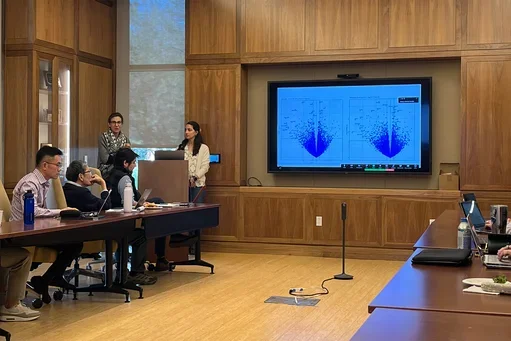
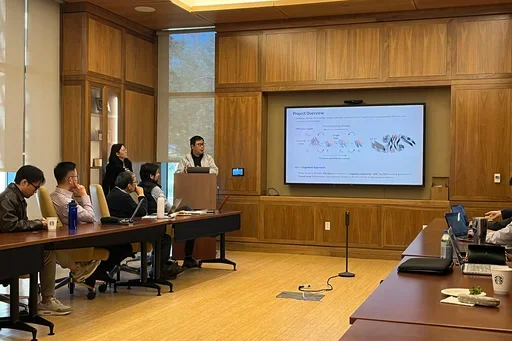
Based on the strength of this new collaborative program, we decided to continue to support this unique effort. In January of this year, Easton Center and Engineering faculty and trainees gathered again for a second annual symposium to share ideas and brainstorm new approaches to the challenges of dementia. The energy and excitement about what is now possible with advances in engineering technology created a powerful feeling of symbiosis and possibility. A variety of concepts were discussed including using voice pattern recognition to identify those at-risk for dementia, to at-home blood testing for AD and related dementias, to harnessing of the tremendous advances in computational power that could enable early diagnosis of AD enabling preventive treatments. A second round of funded proposals have been submitted this spring and undoubtedly will create another wave of exciting partnerships between Easton Center and Engineering faculty and research teams. Attempting to engineer solutions to a complex problem like Alzheimer’s disease will take the effort of multidisciplinary expert researchers working together and your support is helping to create that culture.
Alzheimer’s Blood Test Linked to Future Cognitive Impairment in Older Women

By: Alejandra Sanchez Lopez, MD, Assistant Clinical Professor of Neurology and Geriatric Medicine Division
Blood-based biomarkers have recently become available for clinical use for the detection of Alzheimer’s disease (AD) pathology in patients with cognitive decline. Particularly, plasma phosphorylated tau 217 (p-tau217) has shown high accuracy, comparable to measuring it directly in cerebrospinal fluid, and it is well correlated with brain amyloid.
Plasma p-tau217 has also been shown to predict future dementia and mild cognitive impairment (a stage prior to dementia) years before symptoms appear, since AD pathology has a prolonged phase of biomarker accumulation.
A new study published in JAMA Network Open1 examined the association of p-tau217 with the diagnosis of mild cognitive impairment (MCI) and dementia many years later, and it examined how the association differed by use of menopausal hormone therapy (MHT) regimen and race in older women.
Participants included 2766 postmenopausal women aged 65-79 years from the Women’s Health Initiative Memory Study (WHIMS). Women were recruited in the 1990’s and randomized to either take a placebo vs. two types of oral MHT: estrogen-only (if they had a history of hysterectomy) or estrogen plus progesterone, and were followed for up to 25 years.

The researchers found that increased levels of p-tau217 at baseline were strongly associated with both dementia and MCI later in life. The association was larger in magnitude for women older than 70 years and APOE e4 carriers, which makes sense, knowing that age and APOE e4 are both well-known risk factors for AD.
Higher p-tau217 levels were associated with a three-fold risk of dementia, and those with the highest quartile level had a seven-fold risk. Use of MHT modified the risk; women in the estrogen plus progesterone arm had a higher risk of dementia compared to placebo, but there was no difference among estrogen-only users.
Although both White and Black women showed a higher risk of dementia with higher levels of p-tau217, especially in White women, but no significant association with MCI among Black women was found. Based on prior studies, there is no reason to think that AD biomarker performance varies by race, and most likely this finding suggests that other causes of MCI may be more prevalent in Black women (e.g. vascular cognitive impairment), or that there may be racial inequities in the accuracy of cognitive measures when diagnosing MCI or perhaps the study was unable to detect a difference in this group given the smaller sample size in Black women.
The results do not imply that MHT causes dementia, but that women already at risk of AD may be more vulnerable to developing dementia if they use estrogen and progesterone MHT long after the start of menopause. It is important to clarify that not just the timing of MHT is important, but also the dose and duration of treatment. MHT is typically started in early menopause to relieve symptoms when most women are in their early 50s. In addition, nowadays, estradiol is the preferred estrogen type, which has a better risk profile than the type used in this study. Although there have been inconsistent results, most studies point towards at least a neutral dementia risk when MHT is started in the first 5-10 years of menopause and used for a short duration (and some suggest perhaps a beneficial effect if started within 3-5 years), but further research is needed before making this claim. Consistent with current guidelines, MHT prescriptions should be based on an individual benefit-risk profile to manage menopausal symptoms that affect many women.
Women make up almost two-thirds of Americans 65 years or older living with AD. This study, using a large and diverse sample of community-based women, increases our knowledge of the performance of AD blood-based biomarkers in predicting cognitive impairment at a vulnerable stage in women and adds to the body of research regarding the highly debated topic of MHT and its impact on cognition.
Reference:
- Shadyab, A. H., Zhang, B., LaCroix, A. Z., et al. (2025). Plasma p‑tau217 and incident mild cognitive impairment and dementia in older women: 25‑year prospective study in the Women’s Health Initiative Memory Study. JAMA Network Open. https://jamanetwork.com/journals/jamanetworkopen/fullarticle/2846152
Clinical Research Opportunities
If you are interested in advancing Alzheimer’s disease research, we invite you to consider participating in a study through the ADRC Potential Participant Pool. Below is a list of currently recruiting trials. For a complete list of enrolling studies, please visit our Clinical Studies page.
OBSERVATIONAL STUDIES:
- ARTFL-LEFFTDS Longitudinal Frontotemporal Lobar Degeneration (ALLFTD)
- Alzheimer's Association Study of Latino Brain Health and Cognition
- BrightFocus Neuroimaging in Aging Study
- Dementia Research Focus Group
- Family History and Genetics Risk Factors for Dementia Focus Group
- Resilience/Resistance Against Alzheimer's Disease in Centenarians and Offspring (RADCO) Study
INTERVENTIONAL STUDIES:
- Brain Recovery and Individualized Neuromodulation (BRAIN Trial)
- Modulating Memory with Low-Intensity Focused Ultrasound (LIFUP-MCIAD)
- Microbiota Mediated Flavonoid Metabolites for Cognitive Health (MAEVE) Study
- Transcranial Magnetic Stimulation (TMS) for Memory Impairment in Older Adults (MCI iTBS) Study
- Novartis Study
- Protocol for Maintaining and Improving Mental Status in Alzheimer’s Disease (PROMIS-AD)
Upcoming Events
For more information on our upcoming lectures and events, please visit the Easton Center Community Calendar.
Living a Brain-Healthy Lifestyle
Date: Thursday, June 4, 2026
Time: 4:00 PM - 5:30 PM (PDT)
Location: 1529 Wilshire Blvd, Santa Monica, CA 90403
The second session of the three-part program for Caregivers & Community Members invites you to join an informative and engaging education series designed for family caregivers of individuals with dementia, as well as anyone interested in brain health.
Presented by: Monica Moore, MSG, in collaboration with ElderWell Adult Day Center
Did you know that what is good for the body is also good for the brain? This presentation will highlight the latest research on maintaining brain health as you age and explore evidence-based strategies that may help reduce the risk of developing dementia.
RSVP: MaryAnne Roberto (310) 310-8313 or email maryanne@elderwelladultday.com
Community Brain Health & Caregiving Program
Date: Tuesday, June 9, 2026
Time: 10:00 AM - 12:00 PM (PDT)
Virtual Platform
In partnership with the UCLA ERRC, you are invited to join us virtually for a Zoom program featuring the Easton Center’s Monica Moore, MSG. This session will focus on community brain health and caregiving programs, highlighting available resources, practical strategies, and support systems for individuals and families affected by memory disorders. For more information, visit: https://retirees.ucla.edu/event-6626226
RSVP: Ayesha Dixon (310) 825-7456 or email: adixon@errc.ucla.edu
Lennox Health Fair
Date: Saturday, June 13, 2026
Time: 9:00 AM - 2:00 PM (PDT)
Location: Lennox Middle School, 11033 Buford Avenue, Lennox, CA 90304
UCLA Latino Medical Student Association is hosting the Lennox Health Fair, providing families with access to blood screenings, blood pressure and glucose checks, fresh fruits and vegetables, free prizes, children’s activities, and more.
No registration or RSVP needed. For more information, visit: https://chirpla.org/housing/06.13.2026-lennox-health-fair
Update on Alzheimer’s Disease Research
Date: Thursday, June 18, 2026
Time: 4:00 PM - 5:30 PM (PDT)
Location: 1529 Wilshire Blvd, Santa Monica, CA 90403
The third session of the three-part program for Caregivers & Community Members invites you to join an informative and engaging education series designed for family caregivers of individuals with dementia, as well as anyone interested in brain health.
Presented by: Monica Moore, MSG, in collaboration with ElderWell Adult Day Center
Hear from researchers about the latest findings related to the symptoms and causes of dementia and Alzheimer’s disease. Learn about the latest treatments available and what research is currently being conducted to find a cure for this devastating disease.
RSVP: MaryAnne Roberto (310) 310-8313 or email maryanne@elderwelladultday.com
Planning Ahead: Legal Essentials for Dementia Caregivers
Date: Thursday, July 16, 2026
Time: 3:00 PM - 4:30 PM (PDT)
Virtual Platform
The South Bay Dementia Education Consortium is excited to welcome Erin Cook, MD, UCLA Geriatrics and Janet Morris, Esq. to present on key issues related to decision-making capacity, essential legal documents, and POLST (Physician Orders for Life-Sustaining Treatment). This session will provide practical guidance to help individuals and caregivers navigate planning and care decisions with greater clarity and confidence.
RSVP: https://uclahs.zoom.us/meeting/register/1zEEBP5NRvyyGEiwf8CJ0Q
Newsletter Editorial Team:
Mary S. Easton Center Director: Jason Hinman, MD, PhD
California Alzheimer’s Disease Center (CADC) Director: Timothy Chang, MD, PhD
Co-Directors of Training and Education Activities: Monica Moore, MSG, Mirella Díaz-Santos, PhD, and Jennifer Adrissi, MD, MS
Newsletter Editor: Nancy Osuch
| Subscribe | Unsubscribe from this List | Update Subscription Preferences |
Copyright © 2026 Mary S. Easton Center for Alzheimer's Research and Care at UCLA. All rights reserved.